Recycled materials in luxury: How to guide best practices
"The fashion industry is moving toward a systemic shift where the value of a garment is measured not just by its aesthetic, but by its circularity and environmental footprint."
Consumers should look for verified certifications, understand the energy costs of garment care, and recognize that only about 1% of recycled clothes are turned into new items due to the high cost of separating blended textiles.
How are luxury brands adopting recycled materials in luxury?
A designer traces the fine weave of a recycled polyester thread against a silk swatch in a quiet studio. This shift toward luxury brand material adoption is driven by both environmental necessity and regulatory frameworks.
The European Commission published the EU Strategy for Sustainable and Circular Textiles on March 30, 2022. This strategy aims to transform how high-end products are designed and managed throughout their lifecycle.
The movement toward eco luxury material use is reshaping supply chains globally. For example, Oxfam reported in Spring 2021 on a project in Afghanistan being undertaken jointly with the Burberry Foundation and PUR Projet, working with goat farmers to promote sustainable cashmere production.
This collaboration highlights how high-end labels are attempting to stabilize natural resource chains. While brands seek advanced recycled textiles, they face significant hurdles in technical processing.
What are the major challenges in evaluating green fashion value?
At sunset in the cold lab, you squint at the blended fibers to see if the recycled essence remains.
A technician in a laboratory examines a sample of blended polyester and cotton under a microscope. Evaluating green fashion value becomes difficult when assessing the true lifecycle of a garment.
For instance, studies have shown that the washing and drying process for a pair of classic jeans is responsible for almost two-thirds of the energy consumed through the whole of the jeans' life. Even when the raw material is sustainable, the maintenance phase remains resource-intensive.

The complexity of fiber blends creates a bottleneck for circularity. Currently, only about 1% of recycled clothes are turned into new items, primarily due to the difficulty and high cost of separating mixed and blended textiles.
This technical barrier prevents many luxury brands from achieving a fully closed loop.
| Material Type | Recycling Success Rate | Primary Limitation |
|---|---|---|
| Recycled Clothing | 1% | High cost of separating blends |
| Donated Clothing | 70% | Processed into industrial rags |
What are the current sustainable fashion trends?
A logistics manager watches a shipping container being loaded with second-hand apparel at a bustling port. Understanding sustainable fashion trends requires looking at the global movement of textiles.
While China has emerged as the largest exporter of fast fashion, accounting for 30% of world apparel exports, the luxury sector is focused on high-quality longevity.
The industry also faces scrutiny regarding its reliance on petrochemicals. In 2021, the Changing Markets Foundation released a report on the fashion industry's dependence on oil extraction.
This report suggested that synthetic fibers in the textile industry account for 1.35% of global oil consumption.
Why is textile waste a concern for the industry?
A worker sorts through a mountain of discarded garments in a sorting facility. The sheer volume of waste produced by the industry is a growing concern for regulators and brands alike. Around 5% of the total waste worldwide stems from the textile industry.
The scale of production is also increasing. There has been a 7.1 kg increase in global per-capita textile production from 1975 to 2018. While many clothes are diverted from landfills, the outcome is often low-value.
Textile recycling firms process about 70% of the donated clothing into industrial items such as rags or cleaning cloths.
How can consumers select sustainable luxury?
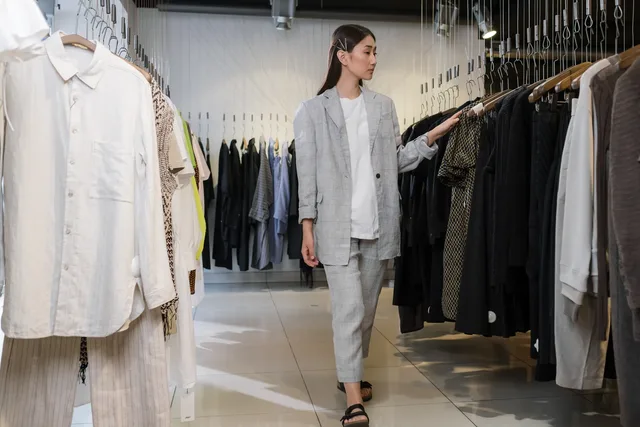
A shopper inspects a garment's label for a specific fair trade certification in a high-end boutique. Making a choice for green wear involves looking for historical precedents of accountability.
The Anglo-Japanese brand People Tree was the first fashion company to receive the World Fair Trade Organization product label in 2013.
To ensure a garment aligns with sustainable practices, follow these steps: 1. Check for specific certifications like Fair Trade labels on the product tag. 2. Examine the fiber content to see if it is a single material or a complex blend. 3.
Verify the brand's participation in known sustainability initiatives or foundation-led projects.
I once spent an afternoon comparing the durability of a single-fiber silk gown against a polyester blend, noticing how the former held its structure much longer. This durability is key to circularity.

However, a limitation of these efforts is that only around 20% of clothing is recycled or reused, as huge amounts of fashion products end up as waste.
- Luxury fashion brands are increasingly integrating recycled materials to meet evolving standards of sustainability and circularity.
- This guide examines how high-end labels transition from traditional resource extraction to responsible sourcing, highlighting the complexities of textile recycling and the specific challenges of managing blended fabrics.
- The Burberry Foundation is involved in projects that highlight how high-end labels are attempting to stabilize natural resource chains.
Related
- What are the best styling tips for LV bags?
- Brand quality selection guide: Why choose a brand? Best tips
What conditions limit the fashion industry's circularity goals?
- The technical barrier of fiber blends significantly hinders the fashion industry's ability to achieve a fully closed loop. 2. The high cost associated with separating mixed and blended textiles presents a major obstacle for recycling. 3. The energy required for garment care, particularly washing and drying, consumes a substantial portion of the product's total lifecycle energy.
The fashion industry must confront the reality that even when raw materials are sourced responsibly, the subsequent maintenance phase demands considerable resources. This condition contrasts sharply with the ideal of a completely regenerative system.
How does the industry address resource dependence?
- The fashion industry recognizes its historical reliance on petrochemicals, a concern highlighted by past reports. 2. Efforts are underway to transition away from traditional resource extraction toward more responsible sourcing methods. 3. Collaborations, such as those involving local farmers, demonstrate attempts to stabilize natural resource chains within the industry.
These shifts indicate that the industry is actively responding to both environmental pressures and emerging regulatory structures. The integration of recycled materials reflects this necessary evolution.
The complexity of the fashion industry's material composition means that achieving high-value recycling remains elusive. Consumers are cautioned that the current recycling rate for used clothing is quite low, which underscores the systemic challenges within the fashion industry.
Wikipedia: Sustainable fashion Based on the retained excerpt mentioning World Fair Trade Organization: The Anglo-Japanese brand People Tree was the first fashion company to receive the World Fair Trade Organization product label in 2013.







Comments 0